

Hey there! As a supplier of Personal CO Alarms, I often get asked a bunch of questions about where these nifty devices can be used. One question that's popped up more than a few times lately is, "Can a Personal CO Alarm be used in a greenhouse?" Well, let's dig into this topic and find out.
First off, let's talk about what carbon monoxide (CO) is and why we need to be worried about it. Carbon monoxide is a colorless, odorless, and tasteless gas. It's produced by the incomplete combustion of fuels like gasoline, natural gas, oil, propane, and wood. When we breathe in CO, it binds to our hemoglobin in the blood, preventing it from carrying oxygen effectively. This can lead to a whole range of health problems, from mild headaches and dizziness to more severe issues like loss of consciousness and even death in high concentrations.
Now, let's think about greenhouses. Greenhouses are used to grow plants in a controlled environment. They can be heated using various fuel - burning appliances, such as heaters that run on natural gas, propane, or oil. These appliances, if not properly maintained or ventilated, can produce carbon monoxide. For example, a faulty gas heater in a greenhouse might start to burn fuel incompletely, releasing CO into the air.
So, in theory, a Personal CO Alarm can definitely be useful in a greenhouse. It can act as an early warning system, alerting you when the CO levels in the greenhouse start to rise. This is crucial because you might not be able to detect the presence of CO on your own due to its invisible and odorless nature.
But there are a few things to consider before using a Personal CO Alarm in a greenhouse.
Environmental Conditions
Greenhouses can have unique environmental conditions. They are often more humid than normal indoor spaces because of the water used for watering the plants. High humidity can potentially affect the performance of a CO alarm. Some cheaper or lower - quality CO alarms might have sensors that are sensitive to moisture, which could lead to false alarms or inaccurate readings. However, many modern Personal CO Alarms are designed to be more resistant to humidity. For instance, some models use advanced sensor technology that can compensate for changes in humidity levels. You can check out our Carbon Monoxide Detector Alarm which is built to handle a variety of environmental conditions, including slightly higher humidity.
Temperature Variations
Greenhouses can also experience significant temperature variations. During the day, especially in sunny weather, the temperature inside a greenhouse can get quite high. At night, it can drop considerably. Extreme temperature changes can impact the performance of the CO alarm. Some alarms might have a specified temperature range within which they operate optimally. If the temperature in the greenhouse goes outside of this range, the alarm might not work as expected. Our 4.5V Battery Carbon Monoxide Detector is designed to have a wider operating temperature range, making it more suitable for the fluctuating temperatures in a greenhouse.
Placement
Proper placement of the Personal CO Alarm in the greenhouse is crucial. You should place it at a height where CO is likely to accumulate. CO is slightly lighter than air, but in a greenhouse with air currents and different temperature zones, it can spread throughout the space. A good rule of thumb is to place the alarm about 5 feet above the ground. Avoid placing it near doors, windows, or vents, as these areas can have rapid air movement that might affect the accurate detection of CO. Also, keep it away from sources of heat or direct sunlight, as this can also interfere with the alarm's performance.
Power Source
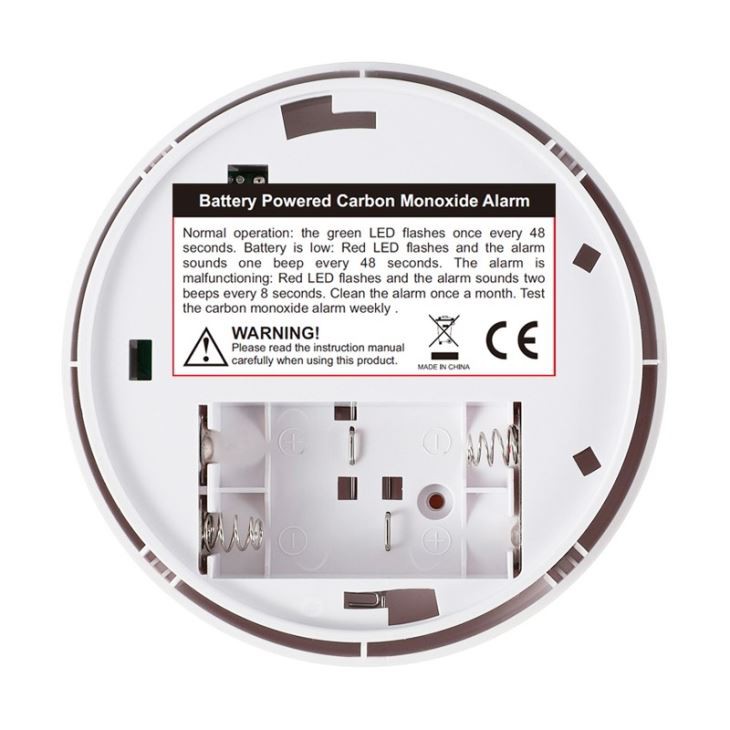
Most Personal CO Alarms are battery - powered. In a greenhouse, you need to make sure that the battery can last for a reasonable amount of time. You don't want to have to constantly replace the batteries, especially if you're not in the greenhouse every day. Our 4.5V Battery Carbon Monoxide Detector is designed to have a long - lasting battery life, so you can have peace of mind knowing that it will keep working without frequent battery changes.
Compatibility with Greenhouse Operations
If you use automated systems in your greenhouse, such as fans or ventilation systems that turn on and off based on certain conditions, you need to make sure that these systems don't interfere with the CO alarm. For example, a powerful fan might blow the air around in such a way that it takes longer for the CO to reach the alarm's sensor, delaying the detection.
Now, let's talk about the benefits of using a Personal CO Alarm in a greenhouse.

Safety for Workers
If you or your employees spend time in the greenhouse, a CO alarm can protect your health. It can give you enough time to evacuate the greenhouse if the CO levels get too high. This is especially important if you're working in the greenhouse for long periods, as prolonged exposure to low levels of CO can still have negative health effects.
Protection for Plants
High levels of CO can also have an impact on plant growth. Although plants don't breathe in CO in the same way humans do, excessive CO in the air can disrupt the normal physiological processes of plants. By using a CO alarm, you can ensure that the air quality in the greenhouse is maintained at a level that is suitable for plant growth.
Peace of Mind
Knowing that you have a CO alarm in the greenhouse gives you peace of mind. You can focus on growing your plants without constantly worrying about the potential presence of carbon monoxide.
If you're convinced that a Personal CO Alarm is a good addition to your greenhouse, we've got you covered. We offer a wide range of high - quality Personal CO Alarms that are suitable for various environments, including greenhouses. Our Home CO Detector can also be used in greenhouses and has all the features you need for accurate CO detection.
If you're interested in purchasing our Personal CO Alarms for your greenhouse or have any questions about our products, feel free to reach out to us. We're always happy to help you find the right solution for your needs.
References
- "Carbon Monoxide: A Silent Killer." Environmental Protection Agency.
- "Effects of Air Pollutants on Plants." Journal of Plant Physiology.
- "Guidelines for the Installation and Use of Carbon Monoxide Detectors." National Fire Protection Association.