

Hey there! As a supplier of Personal CO Alarms, I often get asked about the power consumption of these nifty devices. It's a crucial question, especially for those who rely on these alarms for their safety. So, let's dive right in and explore what goes into the power consumption of a Personal CO Alarm.
First off, it's important to understand why power consumption matters. A Personal CO Alarm is designed to be a reliable safety tool, always on the lookout for that invisible and deadly gas - carbon monoxide (CO). If it runs out of power at the wrong time, it could put your life at risk. That's why knowing how much power it uses and how to manage it is key.
Most Personal CO Alarms are battery - operated. This makes them portable and easy to use in various settings, whether you're at home, in an RV, or on a camping trip. The type of battery used can have a big impact on power consumption. Common batteries include AA, AAA, and lithium batteries.
AA and AAA batteries are widely available and relatively inexpensive. However, they may not last as long as lithium batteries. Lithium batteries, on the other hand, have a higher energy density, which means they can store more power in a smaller package. This often results in longer battery life for your Personal CO Alarm.
The power consumption of a Personal CO Alarm depends on several factors. One of the main factors is the type of sensor used in the alarm. There are different types of CO sensors, such as electrochemical sensors and metal oxide sensors.
Electrochemical sensors are highly accurate and sensitive. They work by detecting the chemical reaction between CO and an electrolyte inside the sensor. These sensors typically consume more power because they need to maintain a stable environment for the chemical reaction to occur. But the trade - off is that they can provide more reliable and accurate CO detection.
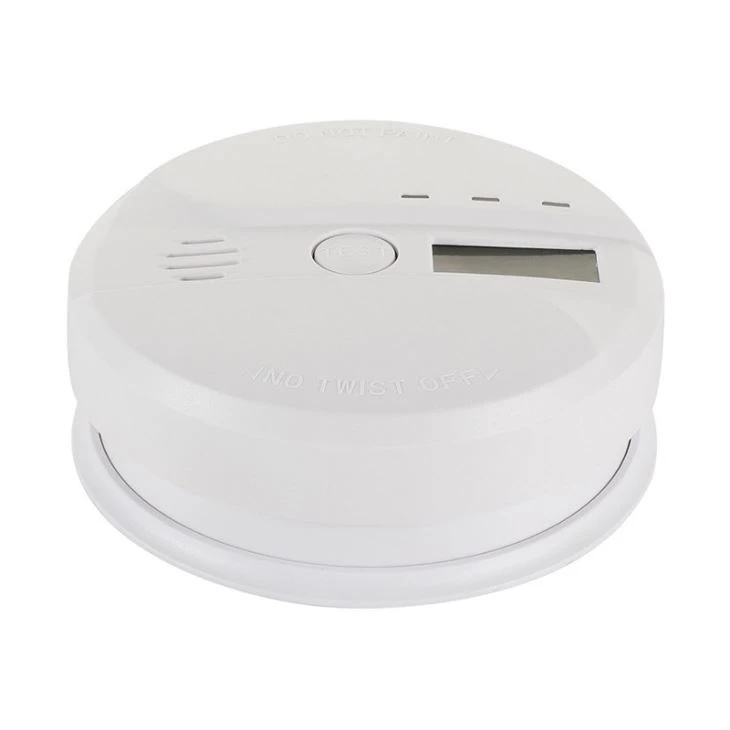

Metal oxide sensors, on the other hand, are less power - hungry. They detect CO by measuring the change in electrical resistance of a metal oxide layer when it comes into contact with CO. These sensors are generally less accurate than electrochemical sensors, but they can still provide a good level of protection at a lower power cost.
Another factor that affects power consumption is the alarm's features. Some Personal CO Alarms come with additional features like a digital display that shows the CO concentration, a memory function that stores peak CO levels, or a wireless connectivity option that allows you to receive alerts on your smartphone. These features can add to the power consumption of the alarm.
For example, a digital display needs power to illuminate the numbers and symbols. The memory function requires power to store and retrieve data, and wireless connectivity needs power to establish and maintain a connection with your smartphone. If you're looking to conserve power, you might want to consider an alarm with fewer features.
Let's talk about how to estimate the power consumption of a Personal CO Alarm. Most manufacturers will provide information about the battery life and power consumption in the product manual. This information is usually given in terms of how long the alarm will run on a set of batteries under normal conditions.
For instance, a manufacturer might state that their Personal CO Alarm will run for 12 months on a set of AA batteries. To estimate the power consumption, you can divide the total energy capacity of the batteries by the number of hours the alarm is expected to run.
Let's say a set of AA batteries has an energy capacity of 2500 milliamp - hours (mAh). If the alarm runs for 12 months (assuming 30 days per month and 24 hours per day), that's a total of 12 x 30 x 24 = 8640 hours. So, the average power consumption of the alarm would be 2500 mAh / 8640 hours ≈ 0.29 mA.
It's important to note that this is just an estimate. The actual power consumption can vary depending on factors like the ambient temperature, the frequency of alarm activations, and the age of the batteries.
Now, if you're concerned about power consumption, there are some things you can do to extend the battery life of your Personal CO Alarm. One of the simplest things is to replace the batteries regularly. Over time, batteries lose their capacity to hold a charge, which can lead to a shorter battery life.
You should also avoid exposing the alarm to extreme temperatures. High temperatures can cause the batteries to discharge faster, while low temperatures can reduce the battery's performance. Keep the alarm in a cool, dry place to ensure optimal battery life.
Another tip is to turn off any unnecessary features. If you don't need the digital display or the wireless connectivity, turn them off to save power. Some alarms also have a low - power mode that you can activate to reduce power consumption.
As a supplier, I always recommend choosing a high - quality Personal CO Alarm. A well - designed alarm will be more energy - efficient and reliable. You can find a great selection of Battery Operated Carbon Monoxide Alarm on our website. These alarms are designed to provide maximum protection with minimal power consumption.
We also offer a range of Carbon Monoxide Alarm options for different needs. Whether you're looking for a basic alarm or one with advanced features, we've got you covered. And if you're concerned about home security, our Co Gas Alarm For Home Security is a great choice.
If you're interested in purchasing Personal CO Alarms for your home, business, or any other application, I'd love to talk to you. We can discuss your specific needs, answer any questions you might have about power consumption or other features, and help you find the right alarm for you.
In conclusion, the power consumption of a Personal CO Alarm is an important factor to consider when choosing an alarm. By understanding the factors that affect power consumption, estimating the power usage, and taking steps to extend the battery life, you can ensure that your alarm is always ready to protect you from the dangers of carbon monoxide. So, don't hesitate to reach out if you have any questions or if you're ready to make a purchase.
References
- Product manuals of various Personal CO Alarms
- Technical literature on CO sensors and battery technology