

Hey there! As a supplier of Carbon Monoxide (CO) alarms, I get asked a ton of questions about these life - saving devices. One of the most common questions I hear is, "What is the ideal placement height for a carbon monoxide alarm?" Let's dig into this topic and find out the best way to place these alarms to keep you and your loved ones safe.
First off, let's understand what carbon monoxide is. CO is a colorless, odorless, and tasteless gas that's produced by the incomplete combustion of fuels like natural gas, propane, oil, and wood. It can be extremely dangerous, even deadly, when inhaled in high concentrations. That's why having a CO alarm in your home is so important.
Now, back to the placement height. The general rule of thumb is that carbon monoxide alarms can be placed on the ceiling or high on the wall. This is because carbon monoxide is slightly lighter than air and will tend to rise. When it comes to ceiling placement, it's a great option as it gives the alarm an unobstructed view of the air in the room. The alarm can quickly detect any CO that's present and alert you in time.
If you prefer to mount the alarm on the wall, it should be placed at least 5 feet (about 1.5 meters) above the floor. This height ensures that the alarm is in an area where CO is likely to accumulate. But why 5 feet? Well, this is based on the fact that in most normal - sized rooms, the air circulation patterns allow CO to spread and reach this height fairly quickly.
Let's talk about different areas in your home and the ideal placement for CO alarms. In the bedroom, you need to have a reliable detector. A Bedroom CO Detector should be placed near the sleeping area. You can either mount it on the ceiling right above the bed or on the wall at the recommended 5 - foot height. This way, when you're sleeping, the alarm can wake you up if there's a CO leak.
In the living room, a Home Carbon Monoxide Detector should be placed in a central location. If it's a large living room, you might even consider having more than one alarm. Place them on the ceiling or high on the walls to ensure maximum coverage.
For kitchens, things get a bit tricky. Kitchens have a lot of air movement due to cooking and ventilation systems. But you still need a CO alarm. You can place it on the ceiling, away from direct sources of heat and steam, like the stove. Avoid placing it too close to the exhaust fan, as it might suck in the air before the alarm can detect the CO.
Now, if you're on the go and want personal protection, a Personal CO Alarm is a great option. You can carry it with you and it will alert you if you're exposed to CO in any environment, like in a garage or when using a generator outdoors.
It's also important to note that you should avoid placing CO alarms near windows, doors, or vents. These areas have a lot of air movement, which can cause the CO to disperse quickly, making it harder for the alarm to detect. Also, don't place the alarm in areas where it can get dirty or covered with dust, as this can affect its performance.
When installing the alarm, make sure to follow the manufacturer's instructions carefully. Different models might have slightly different placement requirements. Some alarms come with mounting brackets that are designed for specific heights and surfaces.
Another thing to keep in mind is the maintenance of the alarms. You should test your CO alarms regularly, at least once a month. This ensures that they're working properly. Replace the batteries in battery - operated alarms every year, or as recommended by the manufacturer. And if you have a hard - wired alarm, make sure it has a backup battery in case of a power outage.

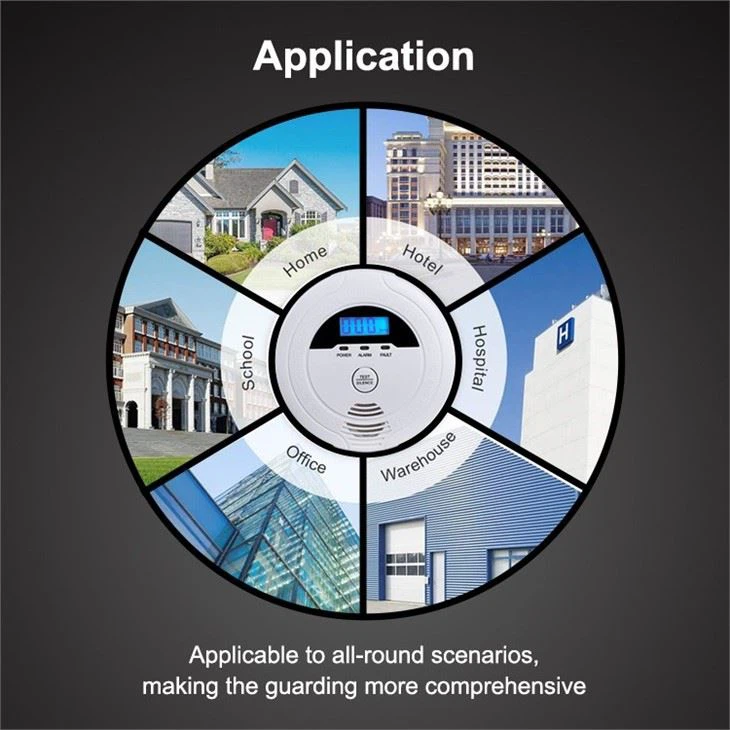
In conclusion, the ideal placement height for a carbon monoxide alarm is on the ceiling or at least 5 feet above the floor on the wall. This ensures that the alarm can quickly detect any CO that's present in the air and alert you in time. Whether it's in your bedroom, living room, kitchen, or on the go, having a properly placed CO alarm is crucial for your safety.
If you're interested in purchasing high - quality carbon monoxide alarms for your home or personal use, we're here to help. We offer a wide range of CO alarms that are reliable and easy to install. Contact us to start the procurement process and let's work together to keep you safe from the dangers of carbon monoxide.
References
- National Fire Protection Association (NFPA). Carbon Monoxide Alarm Placement Guidelines.
- Consumer Product Safety Commission (CPSC). Safety Tips for Carbon Monoxide Detectors.