

Hey there! As a supplier of CO Detector Alarms, I often get asked loads of questions about these life - saving devices. One question that pops up time and again is, “How long does a CO detector alarm usually sound?” Let's dig into this topic and find out all there is to know.
First off, what's carbon monoxide (CO) anyway? Well, it's a colorless, odorless, and tasteless gas that's super dangerous. It's produced when fuels like gas, oil, coal, and wood don't burn completely. When you breathe in CO, it stops your blood from carrying oxygen properly, which can lead to headaches, dizziness, nausea, and in really bad cases, it can even be fatal. That's why having a CO detector alarm in your home or workplace is a must - have.
Now, let's talk about how these detectors work. A CO detector has sensors that can detect the presence of carbon monoxide in the air. When the levels of CO reach a certain point, the detector goes off, and that's when you hear that ear - piercing alarm. But the length of time the alarm sounds can vary based on a few different factors.
Battery - Powered Detectors
Most of the CO detector alarms we supply, like the 3*1.5v AA Battery Carbon Monoxide Detector, are battery - powered. These detectors are great because they're easy to install and can work even if there's a power outage.
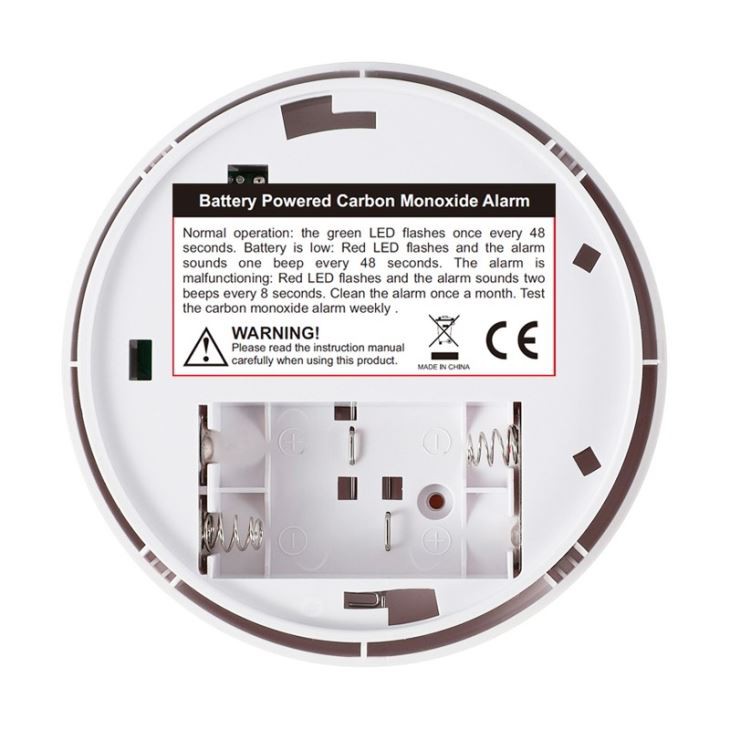

In general, when a battery - powered CO detector alarm goes off, it will keep sounding as long as the battery has power and the CO levels are above the set threshold. Usually, these batteries can keep the alarm going for at least a few hours. But if the battery is old or running low, the alarm might stop sooner. It's really important to replace the batteries in your CO detector regularly, at least once a year, to make sure it works when you need it.
Plug - In Detectors
Some of our customers prefer plug - in CO detector alarms, such as the 3x1.5V AA Carbon Monoxide Sensor Alarm. These detectors are connected to an electrical outlet, so they have a constant power source.
When a plug - in CO detector senses high levels of carbon monoxide, the alarm will keep going until the CO levels drop below the set limit or until you manually silence it. Most of these detectors are designed to sound continuously for as long as necessary to alert you to the danger. Some models even have a backup battery in case of a power outage, so the alarm won't stop working.
Alarm Duration Based on CO Levels
The level of carbon monoxide in the air also plays a big role in how long the alarm sounds. If the CO levels are just slightly above the normal range, the alarm might sound intermittently at first. This gives you a warning that there's a small problem, and you should start looking for the source of the CO.
However, if the CO levels are really high, the alarm will usually sound continuously and at a much louder volume. This is to make sure you can't ignore it and that you take immediate action to get to fresh air and find the source of the carbon monoxide.
Most CO detector alarms are calibrated to start sounding when the CO levels reach around 30 parts per million (ppm) over a period of a few hours. If the levels go up to 70 ppm, the alarm will usually sound within 60 to 240 minutes. And if the levels reach 400 ppm, the alarm should go off within 4 to 15 minutes.
Manual vs. Automatic Silence
Another thing that affects how long the alarm sounds is whether the detector has a manual or automatic silence feature. Some of our Carbon Monoxide Detector Alarm models allow you to manually silence the alarm once you've acknowledged the danger. But this is usually just a temporary fix, and the alarm will start sounding again if the CO levels are still high.
On the other hand, some detectors have an automatic silence feature. After a certain period of time, say 10 or 15 minutes, the alarm will stop sounding on its own. But don't be fooled! This doesn't mean the danger is gone. You still need to check the CO levels and make sure there's no carbon monoxide in the air.
Testing Your CO Detector
To make sure your CO detector alarm works properly and that you know how long it should sound, it's a good idea to test it regularly. Most detectors have a test button that you can press to make the alarm go off. When you test it, listen to how long the alarm sounds and make sure it's loud enough for you to hear.
If you notice any problems with the alarm, like it's not as loud as it used to be or it stops sounding too soon, it might be time to replace the detector. It's better to be safe than sorry when it comes to carbon monoxide.
Contact Us for Your CO Detector Needs
If you're in the market for a reliable CO detector alarm, we've got you covered. Our range of Carbon Monoxide Detector Alarm products is designed to keep you and your loved ones safe from the dangers of carbon monoxide. We offer high - quality detectors at competitive prices, and we're always ready to answer any questions you might have.
Whether you need a battery - powered detector for a small apartment or a plug - in detector for a large office building, we can help you find the right product for your needs. Just get in touch with us, and we can start a conversation about your requirements and how we can meet them.
References
- National Fire Protection Association (NFPA). "Carbon Monoxide Detectors and Alarms."
- U.S. Consumer Product Safety Commission (CPSC). "Carbon Monoxide Poisoning: Risks and Prevention."