

Hey there! As a supplier of fire alarm detectors, I often get asked some interesting questions. One that's been popping up a lot lately is, "Can a fire alarm detector be used in a high - altitude area?" Well, let's dive right into this topic and find out.
First off, let's understand what high - altitude areas are. Generally, high - altitude areas are places where the elevation is significantly above sea level. These areas have some unique environmental characteristics. The air pressure is lower compared to sea - level areas. This is because as you go higher, there are fewer air molecules above you, so the weight of the air pressing down (air pressure) decreases. Also, the air is thinner, which means there are fewer oxygen molecules per unit volume.
Now, let's talk about how these factors can affect fire alarm detectors. There are different types of fire alarm detectors, and each might respond differently to high - altitude conditions.
Ionization Smoke Detectors
Ionization smoke detectors work by using a small amount of radioactive material to ionize the air inside a sensing chamber. When smoke enters the chamber, it disrupts the flow of ions, and this change is detected as a fire signal. At high altitudes, the lower air pressure and thinner air can impact the ionization process. The reduced number of air molecules means there are fewer molecules to be ionized in the first place. This can lead to a slower response time or even false alarms. The detector might not be able to accurately detect the presence of smoke because the ionization pattern is affected by the abnormal air conditions.
Photoelectric Smoke Detector
Photoelectric smoke detectors, on the other hand, work by shining a light beam into a sensing chamber. When smoke enters the chamber, it scatters the light, and a photodetector picks up the scattered light as a sign of smoke. The lower air pressure at high altitudes doesn't have a direct impact on the light - scattering principle. However, the thinner air can cause the smoke particles to disperse more quickly. This might make it a bit more challenging for the detector to detect the smoke, but overall, photoelectric smoke detectors tend to be more reliable in high - altitude areas compared to ionization detectors.
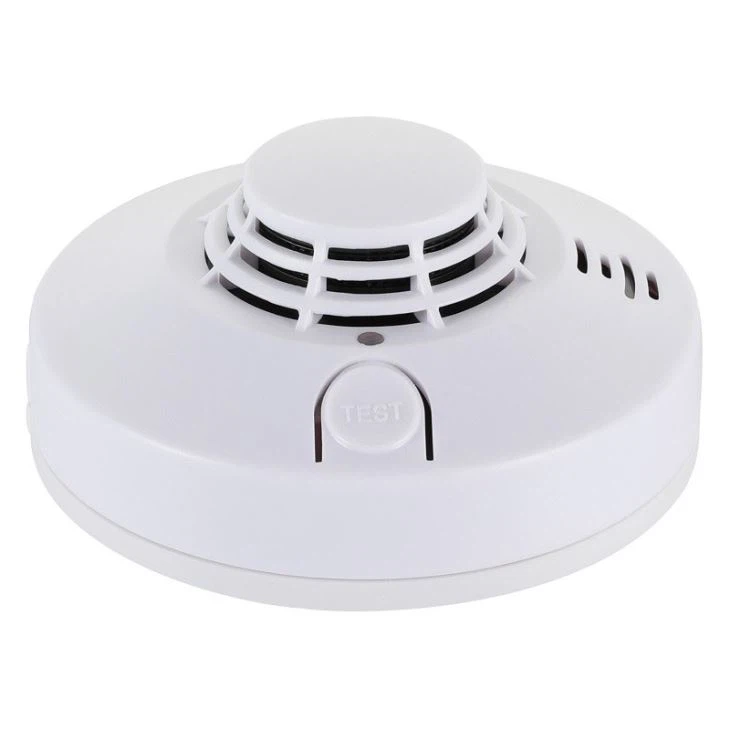

Heat Detectors
Heat detectors sense changes in temperature to detect a fire. They can be either fixed - temperature or rate - of - rise detectors. In high - altitude areas, the normal ambient temperature is generally lower. Fixed - temperature heat detectors are set to trigger at a specific temperature. The lower baseline temperature means that it might take longer for the temperature to reach the trigger point in case of a fire. Rate - of - rise heat detectors measure how quickly the temperature is increasing. The thinner air at high altitudes can affect the heat transfer process. Heat might dissipate more quickly, so the rate of temperature increase might be slower, which could delay the detector's response.
Carbon Monoxide Detectors
Carbon monoxide (CO) detectors are designed to detect the presence of this odorless and colorless gas. At high altitudes, the lower air pressure can affect the diffusion of CO gas. CO molecules might move more slowly through the thinner air, and this can make it harder for the detector to sample the air and detect the gas. Also, the lower oxygen levels at high altitudes can potentially interfere with the chemical reactions that some CO detectors rely on to detect the gas.
So, can fire alarm detectors be used in high - altitude areas? The answer is yes, but with some considerations. If you're planning to use fire alarm detectors in a high - altitude location, here are some tips:
- Choose the right type of detector: As we've seen, photoelectric smoke detectors are generally more suitable for high - altitude areas compared to ionization smoke detectors. For heat detectors, make sure to select ones that can be calibrated to account for the lower ambient temperatures.
- Calibration and testing: Regularly calibrate and test your fire alarm detectors. High - altitude conditions can change the performance of the detectors over time, so it's important to ensure they are working correctly.
- Consider altitude - specific models: Some manufacturers offer fire alarm detectors that are specifically designed for high - altitude use. These detectors are calibrated to work more accurately in the unique environmental conditions of high - altitude areas.
Let's also talk about some of our products and how they can be a good fit for high - altitude areas.
Smoke Alarm 10 Year Battery
Our smoke alarm with a 10 - year battery is a great option. The long - lasting battery means you don't have to worry about frequent battery changes, which can be a hassle, especially in remote high - altitude locations. And if you choose the photoelectric model, it will be more reliable in the thin air conditions of high - altitude areas.
9V Battery Smoke Detector
Our 9V battery smoke detector is another versatile option. It's easy to replace the battery when needed, and it comes in both ionization and photoelectric models. If you're in a high - altitude area, we'd recommend going for the photoelectric version for better performance.
If you're in the market for fire alarm detectors for a high - altitude area, we're here to help. We have a wide range of products that can be customized to meet your specific needs. Whether you're building a mountain lodge, a high - altitude research facility, or any other structure in a high - altitude location, our fire alarm detectors can provide you with the peace of mind you need.
We understand that every high - altitude project is unique, and we're ready to work with you to find the best fire alarm solutions. So, if you're interested in learning more about our products or have any questions about using fire alarm detectors in high - altitude areas, don't hesitate to reach out. We'd love to have a chat with you and discuss how we can help you keep your property and people safe.
References
- National Fire Protection Association (NFPA) standards on fire alarm systems
- Research papers on the performance of fire alarm detectors in extreme environmental conditions
I hope this blog has given you a better understanding of using fire alarm detectors in high - altitude areas. If you have any more questions or need further advice, feel free to drop us a message. Looking forward to working with you on your fire safety needs!