

Hey there! As a supplier of Battery CO Alarms, I often get asked a bunch of questions, and one that pops up quite a bit is whether a Battery CO Alarm can be used in a cold climate. Well, let's dive right into it and figure this out.
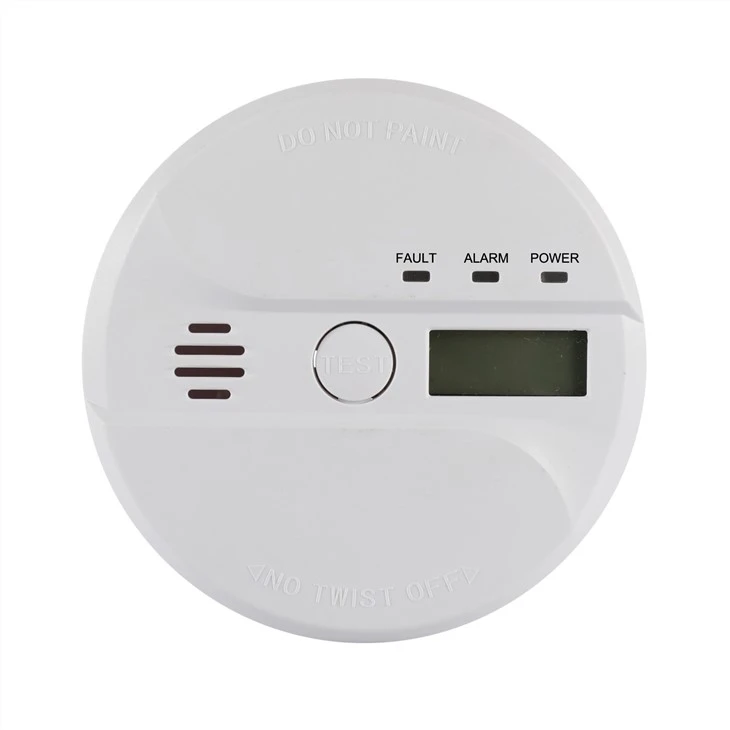
First off, let's understand what a Battery CO Alarm is. These little gadgets are super important. They're designed to detect carbon monoxide (CO) in the air. CO is a colorless, odorless gas that can be really dangerous, even deadly, if you're exposed to it for too long. Our Battery Carbon Monoxide Detector is a great example of this technology. It's powered by batteries, which makes it easy to place around your home or workplace without having to worry about finding an electrical outlet.
Now, when it comes to cold climates, things can get a bit tricky. Batteries, in general, don't perform as well in cold temperatures. You've probably noticed this with your phone or other battery - powered devices. The chemical reactions inside the battery slow down when it's cold, which means the battery might not be able to deliver as much power as it does in normal temperatures.
Most Battery CO Alarms use common batteries like AA or AAA. Our 2*1.5V AA Battery CO Alarm is a popular choice among customers. AA batteries are known to lose their charge faster in cold weather. When the temperature drops, the internal resistance of the battery increases, and the available energy decreases. This can potentially affect the performance of the CO alarm.
For example, if the battery is struggling to provide enough power, the alarm might not be as sensitive as it should be. It could take longer to detect carbon monoxide, or in the worst - case scenario, it might not go off at all. That's a pretty scary thought, especially when you're relying on the alarm to keep you and your loved ones safe.
But here's the good news. Many modern Battery CO Alarms are designed to work in a wide range of temperatures. The manufacturers take into account the fact that these alarms might be used in different climates, including cold ones. They use advanced battery management systems and sensors that can compensate for the reduced battery performance in cold weather to some extent.
However, it's still important to take some precautions. If you're using a Battery CO Alarm in a cold climate, make sure to keep an eye on the battery life. Replace the batteries more frequently than you would in normal temperatures. Most alarms will have a low - battery indicator, but it's better to be proactive.
Another thing to consider is the placement of the alarm. Try to place it in an area where it won't be directly exposed to the cold. For example, don't put it near a drafty window or outside in an unheated shed. Instead, place it in a well - insulated part of the room.
Also, be aware that extreme cold can cause condensation inside the alarm. This can damage the internal components and affect its performance. If you're moving the alarm from a cold environment to a warm one, let it adjust to the new temperature gradually to avoid condensation.
Now, let's talk about the performance of the CO detection itself in cold weather. The sensors in the CO Detector Alarm are designed to detect carbon monoxide molecules in the air. Cold air is denser than warm air, which means the CO molecules might move around less. But the sensors are usually sensitive enough to pick up even small amounts of CO, regardless of the air density.
In some cases, the cold air might actually help in a way. Since the air is denser, the CO molecules are more concentrated in a given volume of air. So, if there is a source of carbon monoxide, the alarm might detect it faster. However, this is a double - edged sword. If the battery is not performing well due to the cold, the alarm might not be able to react quickly enough even though the CO is more concentrated.
Overall, while a Battery CO Alarm can be used in a cold climate, it requires some extra attention. You need to be aware of the potential issues with battery performance and take steps to ensure the alarm is working properly.
If you're in the market for a reliable Battery CO Alarm, especially for use in a cold climate, we've got you covered. Our alarms are built to high standards and are designed to perform as well as possible in different conditions. We offer a wide range of products, from basic models to more advanced ones with additional features.
Whether you're a homeowner looking to protect your family or a business owner needing to ensure the safety of your employees, our Battery CO Alarms are a great choice. We're committed to providing high - quality products at reasonable prices.
If you're interested in learning more about our products or have any questions about using a Battery CO Alarm in a cold climate, don't hesitate to reach out. We're here to help you make the right choice and keep you safe.

Let's work together to ensure that you have the best protection against carbon monoxide, no matter where you live or what the weather is like.
References:
- "Battery Performance in Cold Temperatures" - Journal of Battery Science
- "Carbon Monoxide Detection in Different Climates" - Safety and Health Research Institute